


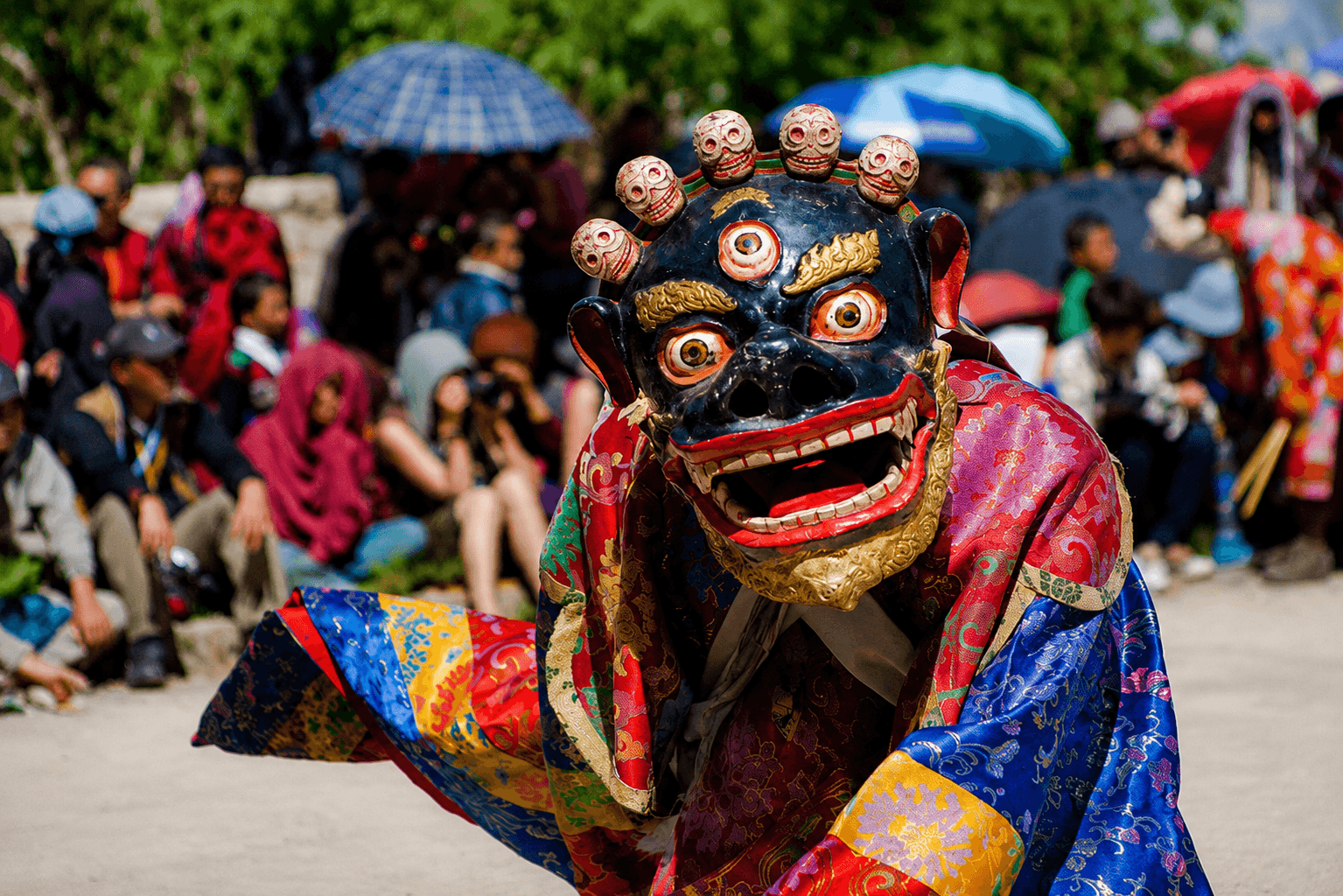
Naro Nasjal fair at Sani Monastery holds special attraction because of the colorfully attired Lamas who perform the Black Hat Dance which is especially interesting because it consists of the evil and good forces in constant struggle with each other. The festival takes place during the blooming of the Guru Naropa Flower, sometime between the 15th and the 20th of the sixth Tibetan month.
Naropa was born as a Bengali prince named Samantabhadra, (c. 1016–1100), believed to have, displayed exceptional intellectual abilities from an early age. He pursued advanced studies in subjects such as logic, grammar, philosophy, and the arts before joining the renowned Nalanda University, where he rose to become one of its most distinguished Buddhist scholars.
A highlight of the festival is the ceremonial unveiling of the revered statue of Mahasiddha Naropa (c. 1016–1100), the great Indian Buddhist scholar and yogi associated with Nalanda University and one of the most influential masters of the Kagyu tradition of Tibetan Buddhism. Naropa is especially remembered for transmitting the profound teachings known as the Six Dharmas of Naropa, a central part of Vajrayana Buddhist practice.
Located in the broad plains of the Stod Valley, Sani Monastery belongs to the Drukpa Kagyu school and is widely regarded as one of the oldest religious sites in the Ladakh–Zanskar region.
Arrive in New Delhi, where you will be warmly welcomed at the international airport by our representative and your tour guide. They will accompany you to your hotel for check-in and an overnight stay. En route, or after you have settled in, your guide will provide a comprehensive briefing on the tour, including essential information, highlights, and the plan for the days ahead.
Hotel- Oberoi Maidens
Meal Plan - Room + Breakfast + dinner
Delhi to Chandigarh by train (3 hours) and drive to Manali (6 hours): We take the morning train Vande Bharat/ Shatabdi to reach Chandigarh- one of the most beautiful and planed city of India. From here we take road journey on well-maintained broad four lane road to Manali through several tunnels which are recently constructed.
Hotel- Eco Groves- Adventure India boutique hotel
Meal Plan - Room + Breakfast + dinner
Nestled in the upper Beas Valley and surrounded by snow-clad peaks, dense forests, and apple orchards, Manali is one of the Himalaya's most celebrated mountain destinations. The valley is renowned not only for its spectacular natural beauty but also for its rich cultural traditions, where local deities continue to play an important role in community life.
After breakfast, we drive to Naggar, the former capital of the Kullu Kingdom, beautifully situated on a wooded hillside overlooking the valley. Here we explore the historic Naggar Castle, built in the 15th century by Raja Sidh Singh, and visit the Nicholas Roerich Art Gallery, dedicated to the renowned Russian painter, philosopher, explorer, and cultural visionary who made Naggar his home during the latter part of his life.
Later, continue to Manali for an exploration of the town and its surroundings. The evening is free to stroll along the lively Mall Road, where local residents, pilgrims, travellers, and visitors from around the world gather amidst cafés, handicraft shops, and bustling markets, creating a vibrant atmosphere unique to this Himalayan resort town.
Hotel- Eco Groves- Adventure India boutique hotel
Meal Plan - Room + Breakfast + dinner
Today we leave the lush green landscapes of the Kullu Valley and enter the dramatically different world of Lahaul, a region renowned for its spectacular mountain scenery, ancient monasteries, traditional villages, glaciers, and rich Buddhist heritage.
The drive from Manali to Jispa covers approximately 95 km and takes about 3–4 hours, following a well-engineered mountain highway maintained by the Border Roads Organisation (BRO). A major highlight of the journey is the passage through the Atal Tunnel, a remarkable engineering achievement that stretches 9.02 km beneath the Rohtang Pass and provides year-round connectivity between Kullu and Lahaul. Emerging from the tunnel, the landscape changes dramatically from the forested slopes of Kullu to the rugged, high-altitude terrain of the Lahaul Valley.
En route, we visit the sacred Ghepan Temple at Sissu, dedicated to Raja Ghepan, the revered deity of Lahaul. We also stop at the historic Gondhla Fort, a seven-storeyed wooden castle built by the local rulers of Lahaul in the 17th century. Further ahead, we visit Tandi, where the Chandra and Bhaga rivers unite to form the mighty Chenab River, one of the principal rivers of the western Himalaya.
By late afternoon, we arrive at Jispa, a picturesque village situated on the banks of the Bhaga River, surrounded by soaring mountains and wide alpine valleys. The remainder of the day is free to relax and enjoy the serenity of this beautiful Himalayan setting.
Hotel- Padma Lodge
Meal Plan – All meals
Today we journey from the lush valleys of Lahaul into the remote and spectacular landscapes of Zanskar. Leaving Jispa, we follow the Bhaga Valley to Darcha, a historic staging point on the ancient trade and trekking routes that once connected Lahaul, Zanskar, Ladakh, and Tibet. Beyond Darcha, we leave the Leh highway and ascend into a dramatic high-mountain environment, passing the small settlements of Rarik and Chika, among the last inhabited villages on this route.
The road climbs steadily towards Shinkun La (Shingo La), a high mountain pass at approximately 5,090 metres, marking the watershed between Lahaul and Zanskar. The pass offers magnificent views of the surrounding peaks, glaciers, and rugged Himalayan terrain. For many years, this region was accessible only by foot and formed part of the classic Darcha–Padum trekking route, once regarded as one of the finest trekking journeys in the Western Himalaya.
Descending into Zanskar, we pass the awe-inspiring Gonbo Rangjon, a striking pyramidal mountain revered by the people of Zanskar as a sacred peak and often referred to as the “God Mountain.” Rising dramatically from the surrounding cold desert landscape, it is one of the most iconic natural landmarks in the region.
Continuing through Kargyak, one of the highest permanently inhabited villages in Zanskar, we proceed to Purne, situated at the confluence of the Kargyak and Tsarap rivers. Purne serves as the gateway to the celebrated Phugtal Monastery and offers a spectacular setting amidst towering mountains and deep river valleys.
Hotel- Camping
Meal Plan – All meals
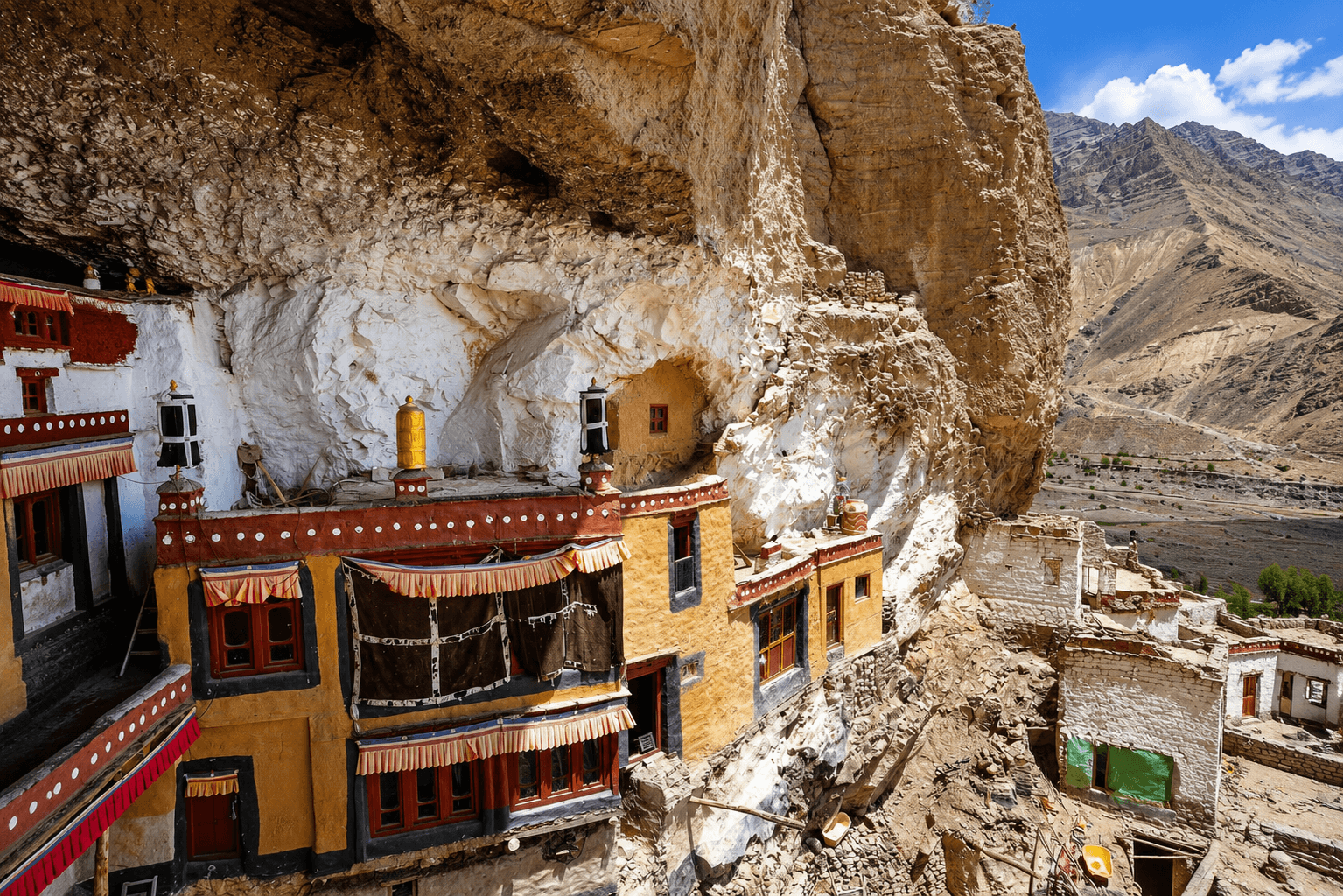
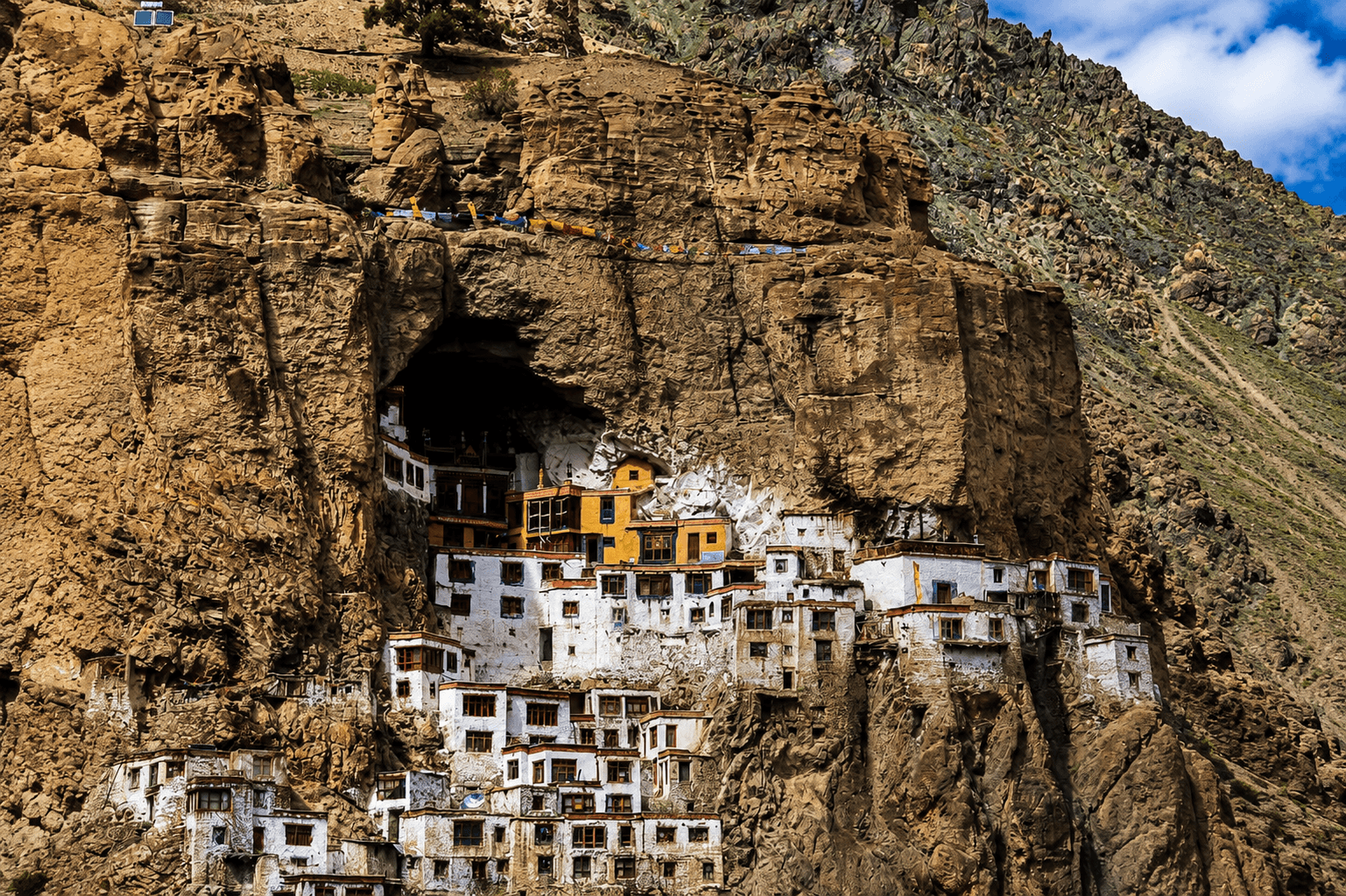
Today we visit one of the most extraordinary monastic sites in the Himalayas. From Purne, a scenic walk of approximately 1.5–2 hours along the Tsarap River brings us to the remarkable Phugtal Monastery, dramatically built around a natural cave in a sheer cliff face. Hidden deep within a remote valley, Phugtal is often regarded as one of the most isolated and spectacular monasteries in the Buddhist world.
The name Phugtal is derived from the Tibetan words Phug (cave) and Tal (liberation or leisure), reflecting its origins as a place of meditation and spiritual retreat. Local tradition associates the cave with the Sixteen Arhats, the legendary disciples of the Buddha, whose images are depicted within the monastery. Over the centuries, the cave is also believed to have been visited by renowned Buddhist masters and scholars, including Padmasambhava, Marpa Lotsawa, and other revered figures of the Himalayan Buddhist tradition.
Perched high above the valley, the monastery offers a fascinating glimpse into the spiritual and cultural life of Zanskar. Its dramatic setting, ancient murals, sacred relics, and enduring monastic traditions make it one of the highlights of the journey.
After exploring the monastery, we return to Purne and continue by road to Padum, the administrative and cultural centre of Zanskar. En route, we visit the historic Bardan Monastery, beautifully situated above the Lungnak River and known for its impressive prayer hall and traditional Buddhist art.
Hotel- Dee Grand MarqMeal Plan – All meals
Today we visit Sani, one of the oldest and most historically significant settlements in Zanskar, located approximately 6 km west of Padum on the road to Kargil. Unlike most monasteries in Ladakh and Zanskar, which are dramatically perched on hilltops, Sani Monastery stands on the valley floor amidst fertile fields and ancient willow groves, giving it a distinctive character and setting.
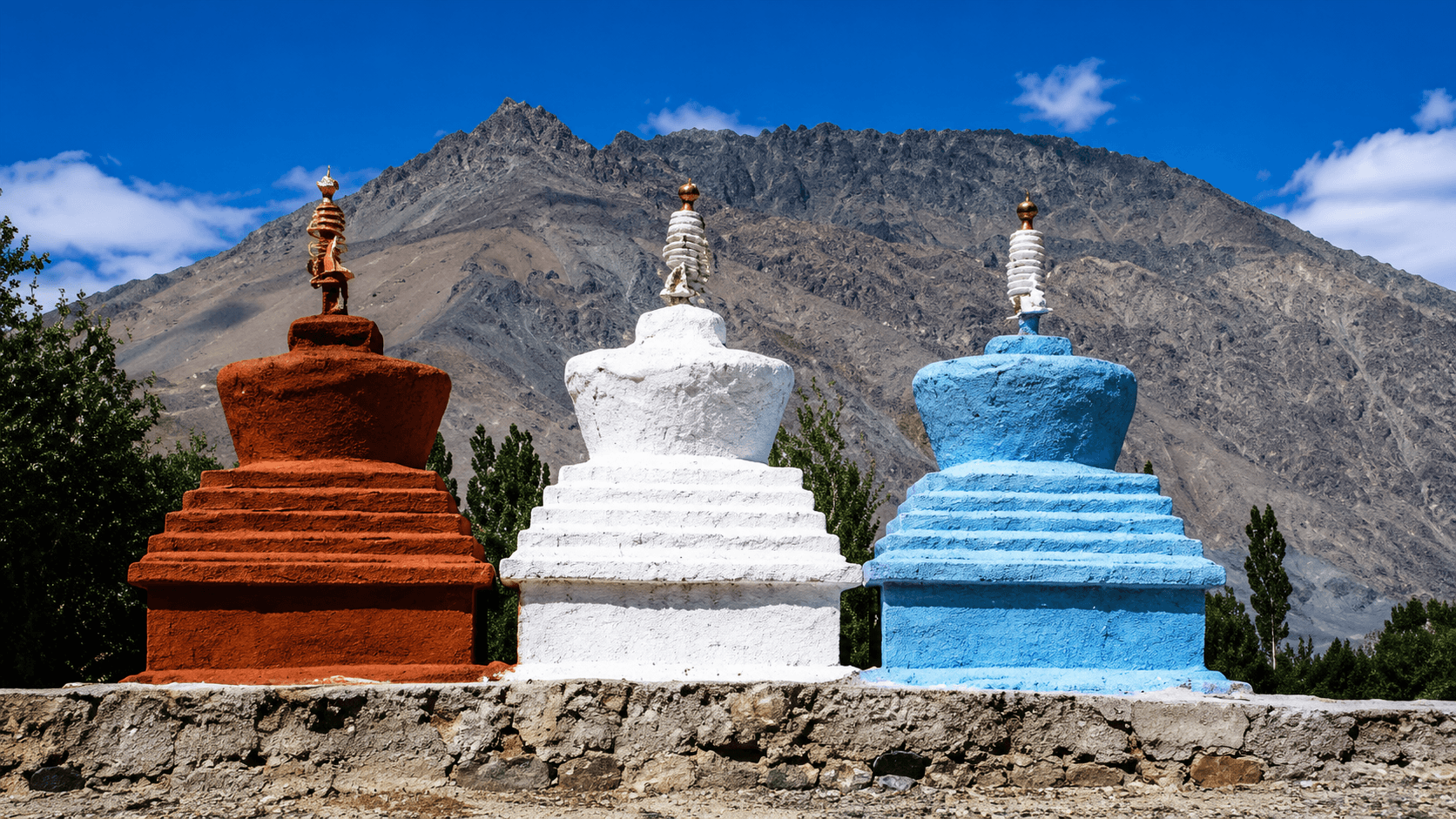
Belonging to the Drukpa Kagyu tradition of Tibetan Buddhism, the monastery is believed to be one of the oldest religious sites in the Ladakh–Zanskar region. Local tradition associates its origins with the Kushan Emperor Kanishka (2nd century CE), and within the monastic complex stands the revered Kanika Stupa, one of the oldest surviving Buddhist monuments in the region. The monastery houses a spacious assembly hall adorned with statues, murals, thangkas, and images of prominent Buddhist masters of the Kagyu lineage.
Particularly noteworthy are the monastery's ancient wall paintings, sacred relics, and the historic rock carvings found in the vicinity, reflecting centuries of artistic and spiritual exchange between India, Tibet, and the Western Himalaya. Sani is also closely associated with the great Indian Buddhist master Mahasiddha Naropa (c. 1016–1100), who is believed to have meditated here during his travels.
The highlight of the day is participation in the renowned Naro Nasjal Festival, one of Zanskar's most important religious celebrations. During the festival, the sacred statue of Naropa, normally kept veiled throughout the year, is ceremonially unveiled for devotees and pilgrims. Colourfully attired monks from Bardan Monastery perform traditional masked dances (Cham), including the celebrated Black Hat Dance, symbolising the triumph of wisdom and compassion over negative forces. The festival provides a rare opportunity to witness living Buddhist traditions, sacred rituals, and the vibrant spiritual culture of Zanskar.
After the celebrations, return to Padum for the night.
Hotel- Dee Grand MarqMeal Plan – All meals
Today we leave Zanskar and embark on one of the most scenic drives in the Indian Himalaya, crossing the spectacular Pensi La Pass (4,400 m), the traditional gateway between Zanskar and the Suru Valley. As we ascend towards the pass, breathtaking views unfold of the magnificent Drang Drung Glacier, one of the largest glaciers in Ladakh and a defining landmark of the Zanskar region.
Beyond Pensi La, the landscape gradually transforms from the stark high-altitude terrain of Zanskar to the greener and more fertile valleys of Suru. During the summer months, alpine meadows and mountain slopes are adorned with a rich variety of wildflowers, creating a striking contrast against the surrounding snow-clad peaks.
Continuing through the picturesque Suru Valley, we are rewarded with magnificent views of Nun (7,135 m) and Kun (7,077 m), the highest peaks in the Zanskar Range, whose gleaming summits dominate the skyline. Their presence lends a dramatic backdrop to the villages, cultivated fields, and willow-lined streams that characterise this beautiful valley.
The villages of Sankoo and the surrounding Suru region are renowned for their vibrant archery traditions, an important aspect of local culture and community life. Traditional bows, crafted by skilled local artisans using techniques passed down through generations, are still used during village archery festivals and competitions. Subject to local availability, we may be able to arrange a demonstration of traditional archery, offering a fascinating insight into one of Ladakh's enduring cultural traditions.
Arrive at Panikhar, a charming village set amidst verdant fields and framed by the towering peaks of the Suru Valley.
Hotel- Gyalsa Inn
Meal Plan – All meals
Altitude: Mulbekh – 3,230 m
After breakfast, we continue our journey through the enchanting Suru Valley, one of the most fertile and scenic regions of Ladakh. The drive from Panikhar to Kargil (approximately 65 km) follows the Suru River through a landscape of verdant fields, traditional villages, poplar groves, and orchards, all framed by the magnificent snow-clad peaks of Nun (7,135 m) and Kun (7,077 m), the highest summits of the Zanskar Range.
From Kargil, we proceed eastward along the historic Srinagar–Leh route to Mulbekh, a region that marks an important cultural transition between the predominantly Muslim communities of western Ladakh and the Buddhist settlements of central Ladakh.
En route, we visit the picturesque village of Shergol, nestled in the Wakha Valley. Its most remarkable landmark is the striking Shergol Monastery, built into a near-vertical ochre-coloured cliff face, creating one of the most distinctive monastic settings in Ladakh. A nearby Buddhist nunnery further reflects the region's enduring spiritual traditions.
Continuing to Mulbekh, we visit the celebrated Mulbekh Chamba, an impressive rock-carved image of Maitreya Buddha (the Future Buddha) standing approximately 8–9 metres high. Believed to date from around the 8th century, this remarkable sculpture is one of the finest examples of early Buddhist art in Ladakh and reflects the artistic influences that travelled along the ancient trade routes linking India, Kashmir, Central Asia, and Tibet.
We also explore Mulbekh Monastery, perched on a rocky hillside overlooking the valley. Historically, its strategic location enabled it to watch over the caravan route between Kashmir and Ladakh. The monastery houses a collection of ancient murals, statues, and religious artefacts that provide valuable insight into the region's Buddhist heritage.
Arrive at your hotel in Mulbekh and enjoy the remainder of the day amidst the tranquil surroundings of this historic Himalayan settlement.
Hotel- Kargil Height
Meal Plan – All meals
Driving Time: Approx. 4–5 hours (excluding sightseeing)
Today we continue along one of the most scenic sections of the historic Srinagar–Leh Highway, traversing dramatic mountain landscapes, high passes, and ancient Buddhist settlements. The route passes through the rugged terrain of western Ladakh, where barren mountains, deep valleys, and striking rock formations create a landscape of extraordinary beauty.
The journey crosses two important mountain passes: Namika La (3,700 m), traditionally known as the “Pillar of the Sky,” and Fotu La (4,108 m), the highest point on the Srinagar–Leh highway. Both passes offer magnificent panoramic views of the surrounding Himalayan and Trans-Himalayan ranges.
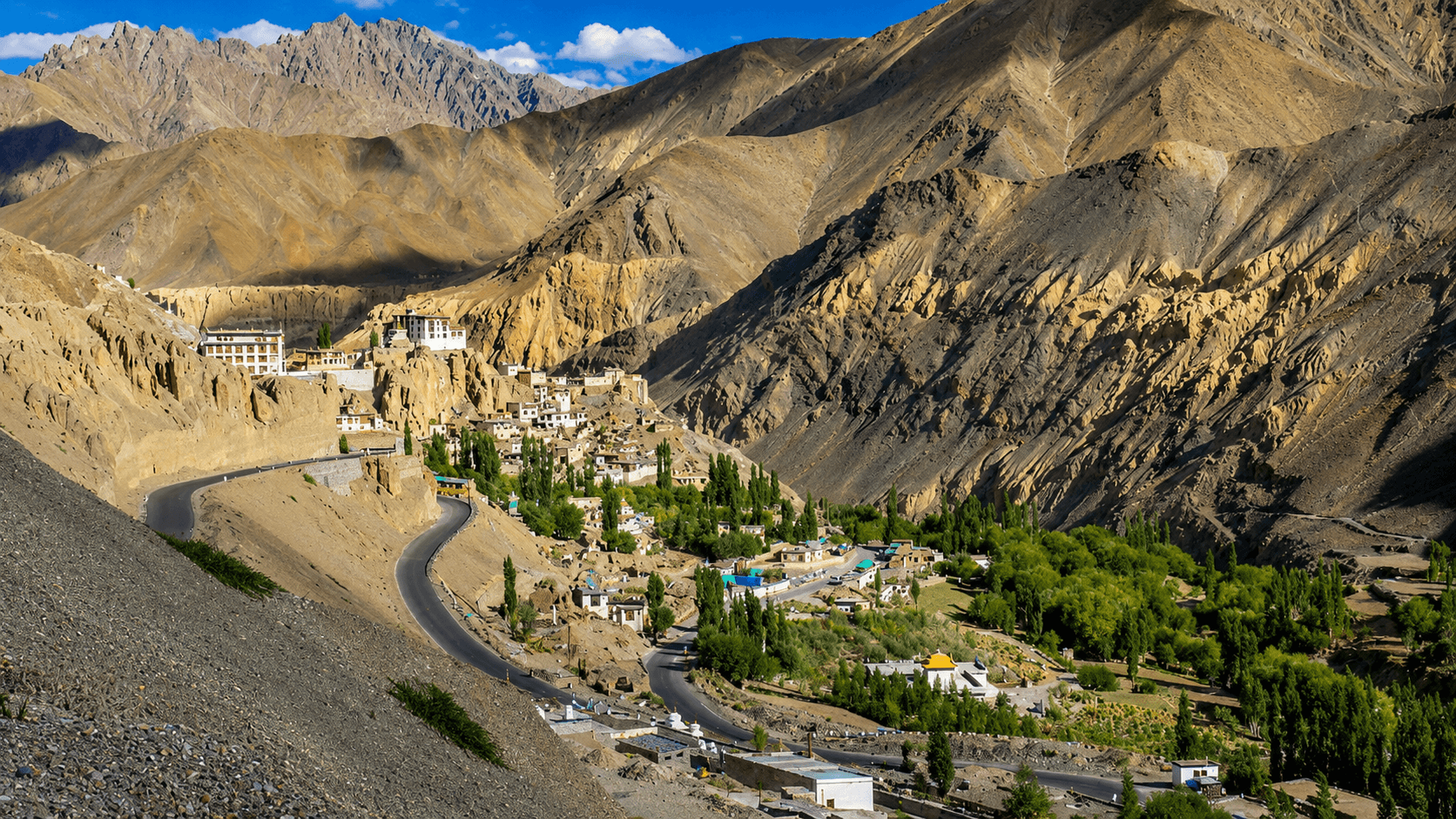
Our principal stop is Lamayuru, one of the oldest and most revered monasteries in Ladakh. Founded in the 11th century and associated with the Drikung Kagyu tradition of Tibetan Buddhism, Lamayuru Monastery is dramatically situated amidst a remarkable landscape of eroded rock formations popularly known as “Moonland” because of its resemblance to a lunar landscape. The monastery houses an impressive collection of ancient murals, thangkas, statues, and sacred manuscripts, reflecting centuries of Buddhist scholarship and artistic achievement.
After exploring Lamayuru, we continue eastward to Uleytokpo, a tranquil settlement situated along the banks of the Indus River. Surrounded by apricot orchards, dramatic mountains, and riverside greenery, Uleytokpo is widely regarded as one of the most picturesque locations in Ladakh and provides
Hotel- Uley Eco Resort
Meal Plan – All meals
After breakfast, we drive a short distance to Alchi Monastery, one of the most important and artistically significant Buddhist sites in Ladakh. Founded between the 10th and 11th centuries and traditionally associated with the great translator Rinchen Zangpo (958–1055), the Alchi Choskhor (monastic complex) is renowned for its exceptionally preserved murals, sculptures, and wood carvings. Reflecting strong artistic influences from Kashmir, Central Asia, and the Indian Buddhist world, Alchi is widely regarded as one of the finest repositories of Himalayan Buddhist art.
Following our visit, we continue towards Leh, stopping en route at several important historical and scenic sites. At Basgo, the former capital of Lower Ladakh, we explore the ruins of an ancient fortress and temples that once played a significant role in the region's political and cultural history.
Further ahead, we stop at Nimmu, where the emerald waters of the Indus and Zanskar rivers meet in one of Ladakh's most celebrated landscapes. The confluence offers a striking contrast of colours and an excellent opportunity for photography.
Arriving in Leh (3,500 m), the historic capital of Ladakh, we check in to our hotel and enjoy lunch. In the afternoon, we set out to explore the town's principal attractions, which may include Leh Palace, the bustling Leh Market, the Main Bazaar, and the peaceful Shanti Stupa, offering panoramic views across the Indus Valley and the surrounding mountains.
Hotel- Hotel Gawaling
Meal Plan – Breakfast + Dinner
Today we explore some of the most important cultural, religious, and historical landmarks of the Indus Valley, offering a fascinating introduction to Ladakh's rich Buddhist heritage and royal history.
Our first visit is to Shey Palace and Monastery, located about 15 km south of Leh. Once the summer capital of the Namgyal rulers of Ladakh, Shey is renowned for its impressive copper-gilt statue of Shakyamuni Buddha, one of the largest such images in Ladakh. The palace and monastery occupy a commanding position overlooking the fertile Indus Valley.
We then continue to Thiksey Monastery, situated approximately 19 km from Leh. Affiliated with the Gelugpa (Yellow Hat) School of Tibetan Buddhism, Thiksey is one of Ladakh's most impressive monasteries. Perched atop a hill and often compared to the Potala Palace of Lhasa, it houses numerous temples, prayer halls, sacred scriptures, and a magnificent 15-metre-high statue of Maitreya Buddha.
Further east, we visit Hemis Monastery, located about 45 km from Leh on the southern bank of the Indus River. Belonging to the Drukpa Kagyu lineage, Hemis is the largest and wealthiest monastery in Ladakh. It was re-established in 1672 under the patronage of King Sengge Namgyal and is renowned for its remarkable collection of thangkas, sacred relics, murals, and Buddhist artefacts. The monastery is also famous for the annual Hemis Festival, held in honour of Guru Padmasambhava, one of the most important figures in Tibetan Buddhism.
On our return towards Leh, we visit Stakna Monastery, beautifully situated on a hill rising above the Indus River. Affiliated with the Drukpa Kagyu tradition, the monastery offers superb views of the surrounding valley and preserves an important collection of Buddhist scriptures and religious art.
We conclude the day with a visit to Stok Palace, the former residence of the Ladakhi royal family. Built in the early 19th century, the palace now houses a museum displaying royal artefacts, ceremonial costumes, jewellery, thangkas, and objects reflecting the history of the Namgyal dynasty.
Hotel- Hotel Gawaling
Meal Plan – Breakfast + Dinner
After breakfast, transfer to Leh Airport for your flight to Delhi. Subject to weather conditions, the flight offers spectacular aerial views of the Ladakh and Greater Himalayan ranges, revealing a dramatic landscape of snow-clad peaks, deep valleys, and high mountain passes.
Upon arrival in Delhi, you will be met and assisted with your transfer to the international terminal or to your hotel, depending on your onward travel arrangements. If time permits, there may be an opportunity for some last-minute shopping, independent exploration, or relaxation before your departure.
This marks the conclusion of an unforgettable journey through the cultural heartlands of Himachal Pradesh, Zanskar, and Ladakh, offering lasting memories of ancient monasteries, vibrant Buddhist traditions, dramatic Himalayan landscapes, and warm local hospitality.
Hotel- Pride Plaza/ or day rooms
Meal Plan – Breakfast + Dinner
Fly home
Frequently Asked Questions
Cost: 2800 USD
Terms and Conditions
1. Eligibility: Fitness, Experience & Motivation
All participants must be physically fit, technically prepared, and mentally motivated for high-altitude climbing. Your mountaineering résumé and experience records will be reviewed before we submit the team application to the Indian Mountaineering Foundation (IMF).
While peaks above 7,000 m demand exceptional stamina and technical competence, numerous Himalayan summits below 6,000 m are equally challenging due to route complexity, weather exposure, remoteness, and objective hazards.
2. Delayed Departure & Early Closure
Expedition timelines may shift due to weather, route conditions, medical concerns, permit directives, or the leader’s safety decisions.
- Delayed closure: Any extension of the itinerary will incur additional charges.
- Early pack-up/retreat: Should the expedition conclude earlier than scheduled, no refund will be provided.
- Any extra transport, hotel stay, lodge/camp nights, or logistical support arising out of delays, roadblocks, medical evacuation, or administrative regulation will be billed separately on a cost-to-cost basis.
3. Satellite Phones, Filming & Drone Permissions
Satellite communication devices are subject to regional security restrictions and cannot be used freely across the Himalaya.
- Only company-registered satellite phones may be used, and will be provided on additional rental in the areas allowed by the Indian Government.
- Drone operations, documentary filming, and aerial recording require prior permits, which vary by district, border zone, and wildlife protection area.
All protocols must be strictly followed to avoid administrative intervention or penalties.
4. Refund Policy
All refund considerations will follow the official cancellation policy issued along with your expedition dossier. Refunds, where applicable, will be processed only as per those terms.
5. Health, Insurance, Rescue & Indemnity
Participants must hold valid high-altitude insurance, including evacuation coverage.
- Any emergency medical service, evacuation helicopter, ground rescue, insurance activation, or hospitalisation can be coordinated through us in the knowledge of LO, but must be paid directly by the team or the insurer.
- All members are required to sign an Indemnity & Risk Acceptance Bond with Adventure India before departure.
6. Booking Confirmation
Once all expedition details, services, and logistics are finalised, the following payment schedule applies:
- 50 % of the expedition fee + IMF fee at the time of confirmation
- Remaining balance payable 61 days before expedition commencement
- 100% advance payment is required for last-minute bookings (booking within 61 days before departure)
7. Non-Refundable / Non-Credit Services
Expedition pricing is quoted as a complete logistical package, not as itemised services.
Therefore, no partial refunds, credits, or adjustments will be issued for unused services (e.g., unused load-ferry, camp nights, high-altitude rations, guide days, transport segments, etc.).
We strongly recommend purchasing full travel cancellation insurance at the time of booking.
8. Replacement Participant
If you nominate another climber to take your place:
- All cancellation charges will be fully waived provided:
- The replacement climber meets the fitness and mountaineering requirements, and
- Secures IMF approval and permit to climb the peak.
9. Sightseeing & Post-Expedition Extensions
Following intense climbing periods in remote high-altitude environments, we encourage participants to decompress and experience India’s cultural and natural richness.
Extension trips may be arranged at additional cost to:
- Taj Mahal / Agra
- Rajasthan Desert & Fort Circuit
- Ladakh & Trans-Himalaya Culture
- Goa / Konkan Coast
- South India (Kerala, Tamil Nadu, Karnataka)
- Northeast India or custom destinations
Cancellation policy
| Cancellations made more than 60 days before departure | A cancellation fee of 10% of the total trip cost will be charged, and the remaining amount will be refunded. |
| Cancellations made between 45 and 60 days before departure | A cancellation fee of 25% of the total trip cost will be charged, and the remaining amount will be refunded. |
| Cancellations made between 30 and 45 days before departure | A cancellation fee of 50% of the total trip cost will be charged, and the remaining amount will be refunded. |
| Cancellations made less than 30 days before departure | The entire deposit will be forfeited. |
UIAA Declaration
UIAA or TREKKING SCALE AS PER THE GLOBAL STANDARDS
The grading of the Kang La Pass trek needs to be understood through two different lenses, as global standards distinguish between technical climbing difficulty and trekking difficulty. The UIAA scale, established by the UIAA, is primarily designed to measure technical rock-climbing challenges rather than trekking routes. Since Kang La does not involve any technical climbing elements—such as the use of ropes, harnesses, or protective gear—it falls under the category of “UIAA Grade 0,” meaning non-technical. In essence, it is considered an alpine hike rather than a climb.
However, for trekkers, the more relevant classification comes from international trekking scales, which evaluate routes based on altitude, endurance, terrain, and remoteness. Systems such as the Alpine grading used in Europe, IFMGA/UIAA trekking categories, and global adventure travel grading frameworks all place Kang La in the “Difficult” or “Demanding” category. This reflects not technical complexity, but the physical and environmental challenges encountered along the route.
From a global perspective, the trek’s difficulty becomes clearer when broken down into its key components. At an altitude of approximately 5,300 meters, Kang La firmly falls within the realm of very high-altitude trekking, where reduced oxygen levels significantly affect physical performance. The trek typically spans 8 to 10 days, with long walking hours of 5 to 8 hours each day, requiring sustained stamina and resilience.
The terrain further adds to the challenge. Trekkers must negotiate river crossings, loose moraine, scree slopes, and steep ascents and descents over the pass, all within remote valleys that demand careful footing and awareness. While none of these require technical climbing skills, they collectively create a physically demanding environment. The remoteness of the Zanskar side enhances the seriousness of the trek, as evacuation options are limited, giving the journey an expedition-like character.
In terms of global equivalence, Kang La is consistently classified as non-technical (UIAA Grade 0) but T4–T5 (demanding to very demanding) on the Alpine trekking scale, and simply “Difficult” under both international and Indian trekking gradings. Despite this, the trek often feels harder than its classification suggests. The combination of high altitude, thin air, long remote stretches, and unpredictable mountain weather can significantly increase the perceived difficulty. As a result, many trekkers underestimate Kang La simply because it is labeled “non-technical,” when in reality it demands strong endurance, proper acclimatization, and mental resilience.