

STORY
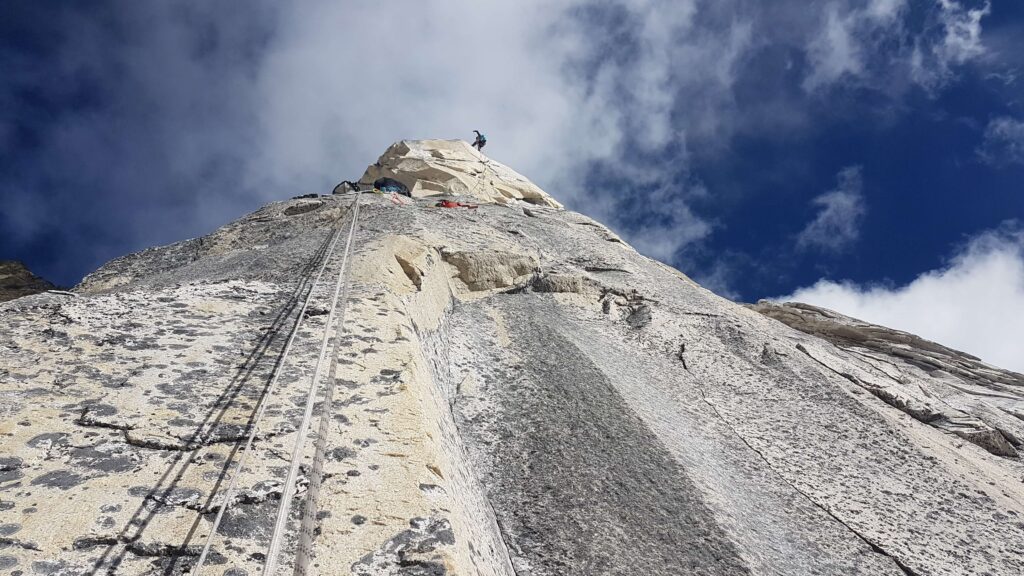
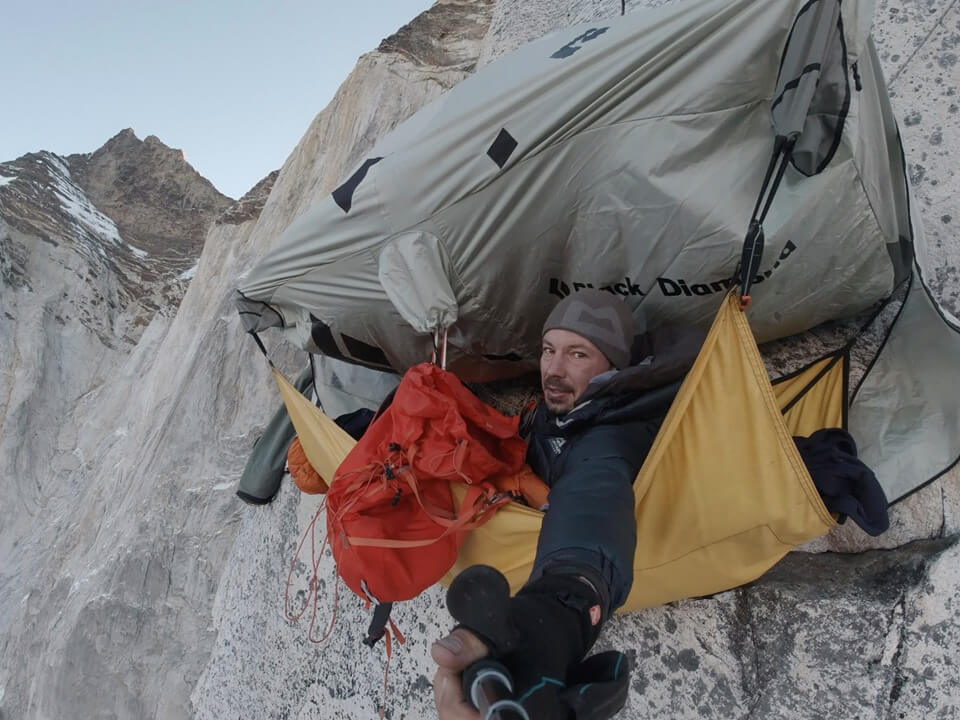
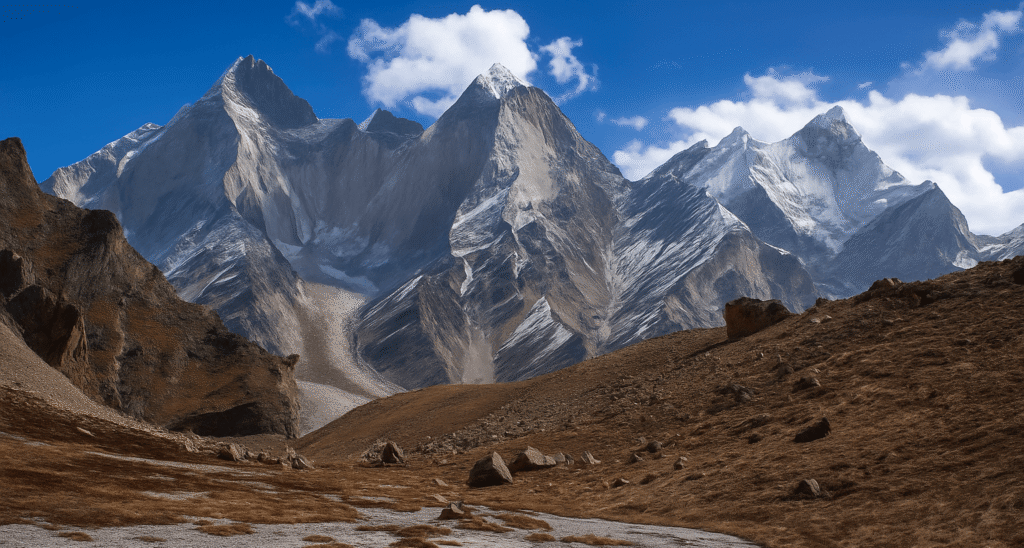
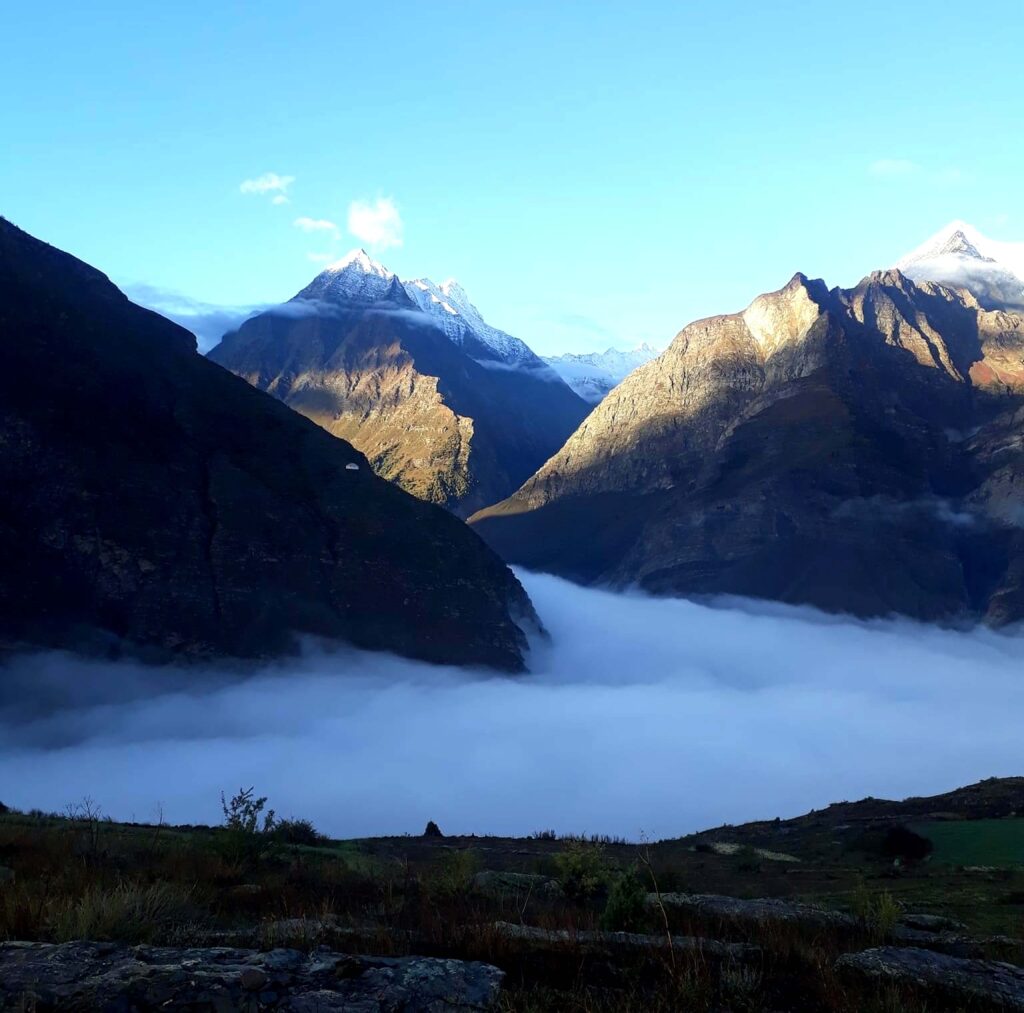
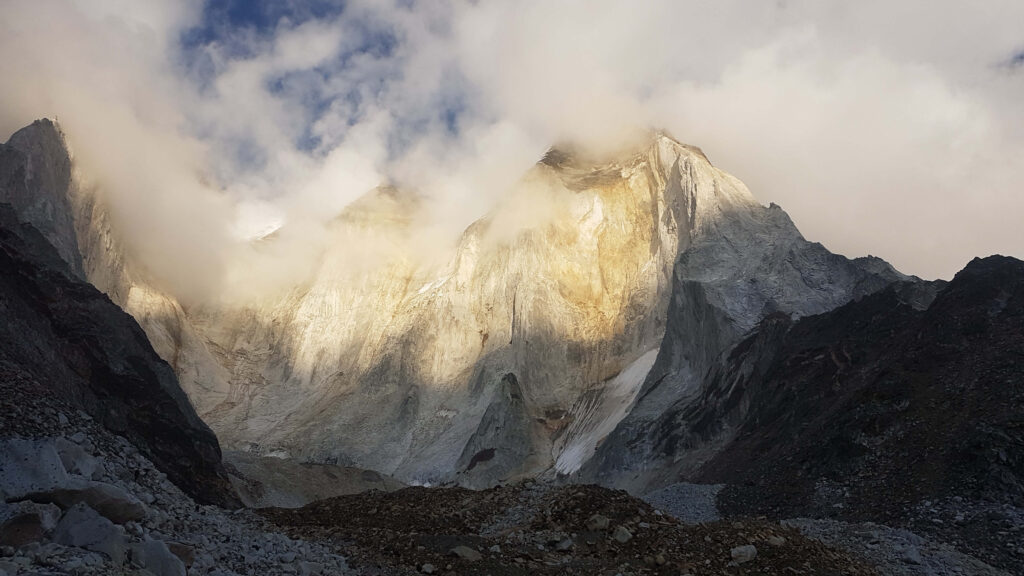
Bhagirathi III (6,454 m), rising in the Garhwal Himalaya, is renowned not for extreme altitude but for its formidable big-wall character—steep granite faces, mixed climbing, and committing rock-and-ice lines.
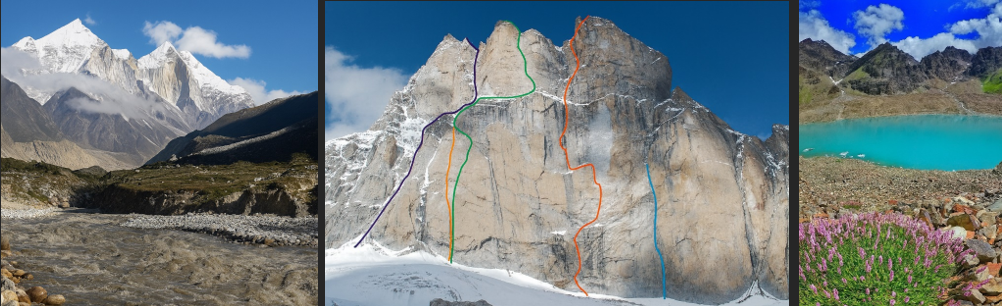
The peak was first climbed in 1933 by British alpinists Colin Kirkus and Charles Warren via the Southeast Ridge. Nearly half a century later, in 1982, Bob Barton and Allen Fyffe established the celebrated Southwest Pillar, often referred to as the Scottish Route, involving sustained granite climbing up to 5.9 A2, finishing on ice slopes.
The West Face, a striking and direct line up the overhanging wall, was pushed in 1990 by Slovenians Janez Jeglič and Silvo Karo—an ascent regarded as one of the most demanding in the Indian Himalaya at the time (Grade VIII, A4, 85° ice). Another legendary line, the “Impossible Star”, a 1,300-metre masterpiece graded 5.11 A3+, was opened by a Spanish team in 1984.
The probable first complete ascent of the Southwest Ridge was accomplished only recently, in October 2024, by a team including Stephan Siegrist and Jonas Schild. The Central Pillar of the Southwest Face was climbed in 1993 in the Czech Direct style by Z. Michalec and Z. Šlachta, while in 2004 W. Hölzler and J. Pflugmacher completed Stairway to Heaven, a direct line up the Southwest Pillar.
Adventure India’s 2006 Austrian-led expedition under Starchel Helmut remains a notable chapter in the mountain’s climbing history, followed more recently by the Slovak expedition led by Martin in 2019, operating between Bhagirathi III and IV. Our team has over twenty years of experience with this Big Wall.
ITINERARY
This programme has been designed with insights drawn from our extensive past expeditions; however, we recognise that every mountaineer approaches the same peak with distinct objectives, timelines, and climbing philosophies. Accordingly, we remain fully flexible—whether you wish to shorten the expedition to a practical minimum or extend your stay in the mountains for acclimatisation, technical preparation, or personal aspiration.
Cost variations will naturally arise depending on whether you choose an Alpine Style or Expedition Style approach. Finalising these details typically requires a detailed exchange of communication, as each team’s needs must be matched carefully with logistics, equipment, and support systems.
We have intentionally outlined a prevalent day-by-day plan from Base Camp to the summit because no two climbers experience the mountain in the same way, and conditions can vary widely. If required, we can share IMF-submitted expedition reports from our previous teams to help you understand the route, challenges, and technical specifics. Irrespective of the summit outcome, we insist on submitting a post-expedition report, as each attempt contributes to the collective knowledge of the mountain and helps future climbers prepare more responsibly.
Delhi Arrive New Delhi airport. Our office staff, most likely your base camp manager will come to receive you at the airport and assist you in smooth check in to a hotel centrally located, easy to explore Delhi and reach IMF next morning for the briefing. We host the welcome dinner this day in Delhi followed by a casual discussion about your expedition.
Hotel/ Camp- Oberoi Maidens
Meal Plan - Room + Breakfast + welcome dinner
As per the schedule received from IMF, our team will drive you to IMF for briefing. If you wish to purchase anything, including rice (Korea), you can do that and further we will drive to Rishikesh, with hot lunch on the way. Rishikesh is a beautiful holy city on the banks of River Ganges, we will see the evening prayer. Rishikesh exudes a distinct mysticism and spirituality. Known in mythology as the abode of Shiva and the place where Ram observed penance for killing Ravana, the place holds importance for all Hindus. It is believed that meditating in this ‘World Yoga Capital’ brings one closer to attaining salvation. Gateway to the Himalayas, Rishikesh abounds in natural beauty as the mighty Ganga flows majestically past lush green hills. Take a tour around this quiet town and let yourself be soaked in its beauty and tranquility. Lakshman Jhula: A landmark in the town, it is a suspension bridge across the Ganga. According to a legend the bridge was built of jute ropes by Lakshman, hence the name Lakshman Jhula. Enjoy spectacular views of the holy river that flows beneath it as well as the striking mountains which lie in the backdrop. A favorite pastime for tourists visiting Lakshman Jhula is feeding the fish in the river. Triveni Ghat: This is the main bathing ghat in Rishikesh, forever busy with thousands of devotees taking a dip early morning. The ghat derives its name from the belief that that the three rivers Ganga, Yamuna and Saraswati meet here. The ghat is especially busy in the evenings when the aarti is conducted. The air turns especially sacred when priests offer their prayers and chant mantras to the river. After the aarti, the river gives out a spectacular view as thousands of earthen lamps are set afloat on the river. Overnight Hotel
Hotel/ Camp- Vasundhara Palace
Meal Plan - Half Board
Rishikesh to Uttarkashi 165 Kms/ 6 hours: The drive between Rishikesh and Uttarkashi is reasonably wide, very smooth and scenic. Narendra Nagar is the first town, 15 Kms beyond Rishikesh. Thereafter, another vital town is Dharasu, about 115 Kms from Rishikesh. This is an important junction because the route to Yamunotri (100 Kms away from Dharasu) bifurcates from here. One gets the first view of Bhagirathi about 10 Kms before Dharasu. We reach Uttarkashi before noon and few hours are spent for the wild life formalities concerning our climb, although our advance party that joins us at Uttarkashi would have completed major formalities. Today with the climbing equipment, base camp equipment, Butane cartridges, mountain guide, cook and other staff. If you lack any gear, you can check here in our office, although it’s good to share the equipment demand well in advance. You will collect all necessary permits from our office and if required, the satellite phone and drone too with necessary approvals. You need to request for satellite, drone and walkie talkies well in advance.
Hotel/ Camp- Ganga Palace
Meal Plan - Full Board
(3046m), 95 Kms/ 3 hours
The drive is scenic, Gangotri is one of the most prominent Hindu shrines and here we perform prayer for the wellbeing of our expedition team and success in the mountains. Gangotri, the origin of the River Ganges and seat of the goddess Ganga, is one of the four sites in the Char Dham pilgrimage circuit. The original Gangotri Temple was built by the Gurkha general Amar Singh Thapa. The river is called Bhagirathi at the source and acquires the name Ganga (the Ganges) from Devprayag onwards where it meets the River Alaknanda. The origin of the holy river is at Gaumukh, set in the Gangotri Glaciers and is a 19 km trek from Gangotri, which is among the most beautiful in the Garwhal districts, with, high above, a snowline that endures year round and below a carpet of forests, superb Himalayan views and all the joys of trekking through God's country. Overnight tourist bungalow/Camp
Hotel/ Camp- Mandakini Hotel
Meal Plan - Full Board
This morning after breakfast we visit the famous Gangotri temple and later we trek to Bhojwasa. The entire trek today is along the roaring Bhagirathi river. Arrive Bhojwasa and camp. Afternoon free to explore the area and to enjoy excellent sunset on Bhagirathi group of peaks. Overnight at Camp
Hotel/ Camp- Adventure India Trekking Camp
Meal Plan - Full Board
We trek this morning to the Nandanvan, which is a beautiful meadow, with lush with Alpine flowers, and we fix our base camp here. You find the awesome sight of Shivling and the Bhagirathi mountains from this camp at Nandanvan.
Hotel/ Camp- Adventure India Trekking Camp
Meal Plan - Full Board
The initial two-hour trek across alpine meadows and sandy flats is deceptively easy towards the base camp which we set for the further acclimatization.
Hotel/ Camp- Adventure India Trekking Camp
Meal Plan - Full Board
Our LAP (low altitude porters) will come back from here and only cook+ kitchen helpers will stay. The HAP (high altitude porters) will stay longer according to the plan made with individual expedition leaders.
Hotel/ Camp- Establishing Base Camp
Meal Plan - Full Board
Higher Camps and summit day
Hotel/ Camp- Base Camp
Meal Plan - Full Board
The team reaches back to the base camp this day after closing its successful expedition, this day is the last day in the high mountains to celebrate the wellbeing and environment of mountains. The team and base camp staff including LO, cook and helper does the pack up and same day, the porters reach the BC from Uttarkashi for trek back with team and equipment.
Hotel/ Camp- Base Camp
Meal Plan - Full Board
We follow the same route and reach to Gangotri for the night stay.
Hotel/ Camp- Mandakini Hotel
Meal Plan - Full Board
Drive to Rishikesh via Uttarkashi We follow the same route and reach Uttarkashi, leave equipment and unused butane propane in our office and after lunch drive back to Rishikesh.
Hotel/ Camp- Vasundhara Palace
Meal Plan - Half Board
Drive to Delhi, the evening is free to visit some important places of interest. We will discuss in advance the places you can visit in Delhi this evening, and dinner will be hosted by us in which you can interact with some popular Indian mountaineers.
Hotel/ Camp- Ashoka Country Resort
Meal Plan - Half Board and farewell dinner
De briefing at IMF, visit places in Delhi and drive to airport to fly home
Cost of the expedition
USD 5,500 per person (based on a minimum group size of six participants)
This is the standard per-person cost; however, it can be adjusted depending on your specific requirements, preferred climbing style (Alpine or Expedition), duration, and logistical needs. Once you share your expectations, we can revise the cost accordingly—either upward or downward.
We extend special concessionary rates to mountaineers who choose to climb with us for a second time, in recognition of their continued trust and association with Adventure India.
- Satellite phones, walkie-talkies to be operated wherever the government allows
- Filming, documentary and drone permissions wherever the government allows.
- Mountain Guide and additional Climbing Sherpa/ High altitude porters
- Cargo handling for the expedition equipment and food
- Butane gas, climbing ropes and any other equipment you would require
- Insurance from Global Rescue, our partner in the mountains
- Generator of any capacity at the base camp
- Leisure tour to any place in India after the expedition
What does the cost include?
- All administrative work, including liaison with IMF, cargo, insurance, satellite phones, drones, walkie-talkies, and forest & wildlife departments. Assistance in drafting a detailed expedition report for IMF, magazines, journals, or projects.
- IMF peak booking fee
- Liaison Officer (LO) for the entire expedition, including equipment, honorarium, food, accommodation, and transportation
- State government fee, wildlife fee, and national park fees (where applicable)
- 24-hour assistance at international airports, along with all airport-to-hotel transfers with a local representative
- Five-star hotel accommodation in Delhi and other major cities with breakfast
- Best available hotels, heritage houses, and camps in smaller cities and higher Himalayas on a half-board basis
- Adventure India base camp management with base camp manager, cook, kitchen helpers, and all necessary equipment
- Fully equipped base camp setup including dining tent, kitchen tent, toilet, and shower tent for members and staff
- Individual base camp tent for each member
- Solar panel facility at the base camp
- Insurance for the Adventure India team and their entry charges in wildlife areas/national parks
- Air-conditioned transportation in cities and 4WD vehicles in higher mountains with experienced drivers
- Transportation of all expedition equipment for members and staff to and from the base camp
- Accompanying escort/trekking guide
- City and monument guide wherever required (excluding entrance fees)
- High-altitude and low-altitude porters for expeditions
- Group climbing gear, including fixed and dynamic ropes during the climbing period (as required)
- Meals during trekking and at base camp with the best available combinations and fresh supplies (base camp remains operational throughout the expedition)
- Weather forecast reports throughout the expedition (or up to base camp if no communication devices are carried)
- Comprehensive medical kit for members and staff
- Oxygen cylinders, masks, regulators, and gear training at base camp by Sherpa guide
- Farewell dinner and mementoes in Delhi
- Peak climbing certificate upon successful completion of the expedition
- Adventure India duffle bag
- Garbage management
- Tips
What doesn’t the cost include?
- International and domestic flight tickets
- Tourist visa and mountaineering visa fees
- Meals in hotels where not mentioned in the program
- Upgradation of hotel rooms
- Single room supplement charges
- Entrance fees for monuments
- Mandatory insurance covering medical and high-altitude evacuation (including trip cancellation, interruption, rescue, air evacuation, treatment, and repatriation)
- Satellite phone hire charges, refill costs, drones, cameras, and walkie-talkies (subject to permission and additional cost)
- Butane gas, climbing rope, and any other equipment not listed in the contract
- Mountain guide and additional high-altitude porters (HAPs)
- Personal climbing gear and sleeping bag
- Personal expenses of any nature, including toiletries
- Additional services due to changes in the program for any reason
- Filming, documentary, and drone permit fees
- GST (Goods and Services Tax) applicable in India @ 5%
- Summit bonus for climbing Sherpas
- Any extension tours before or after the climbing expedition
UIAA Grade
The free-climbing / mixed-climbing grade of Bhagirathi III varies depending on the route. For example, the classic overhanging west face has been climbed at UIAA grade IX (or VIII–IX, depending on conditions).
For a more moderate route, the recently done SW ridge, climbers report UIAA grade IV–V (or “Grade 4–5”) for the rock-ridge sections.
Why with Adventure India?
COST, EXPERIENCE, EQUIPMENT, TEAM, SAFETY AND FOOD
At Adventure India, adventure is not a business, but it’s a way of life. We never stepped into the mountains to earn profits; we stepped into them because we always feel the same thrill we felt in our twenties while climbing peaks, crossing high passes, and cycling through wilderness purely for joy. That spirit has not faded, even though our team has long crossed its fifties. This is the first and most honest reason to choose us– “we live adventure, not sell it”. The second is our experience. Decades spent in the Himalayas and beyond allow us to anticipate challenges, ensure safety, and guarantee a successful journey. And finally, we treat each expedition with heart and precision, where we offer carefully curated itineraries, excellent equipment, wholesome food, trusted guides, comfortable stays, and fair pricing. All planned to match your pace, taste, and expectations. With Adventure India, you don’t just travel the mountains; you experience them in their true essence- responsibly, joyfully, and authentically.
COST
Adventure India does not treat adventure as a commercial transaction. Our pricing is transparent, fair, and free from hidden charges. Every expedition is costed with the traveller in mind: quality without extravagance, comfort without unnecessary expense. We believe adventure should remain pure and accessible, not inflated in the name of “luxury outdoors.”
EXPERIENCE
Our greatest strength lies in decades of mountain experience. Having spent a major part of our lives navigating Himalayan peaks & passes, remote valleys, and cycling routes, our understanding of terrain, weather, acclimatization needs, and mountain ethics is not theoretical but lived. This expertise is your assurance of both successful and meaningful journeys.
EQUIPMENT
We curate and provide reliable, top-grade gear suited specifically for mountain conditions. From tents and sleeping systems to technical accessories, everything is selected to support comfort, safety, and performance at altitude. We believe that good equipment should enhance adventure, not complicate it.
TEAM
Adventure India is led by people who have devoted their lives to adventure for the sheer joy of wild spaces, movement, and the freedom of nomadism, not for commerce. Although our team has now crossed its fifties, the spirit remains unmistakably young. You travel with individuals who do not merely map routes, but live them. Their camaraderie, mountain wisdom, and deep respect for nature shape every expedition, trek and journey we curate.
Across the past three decades, our team has summited peaks, crossed formidable passes, and continuously crafted meaningful ways to travel through remote landscapes. Their stories stretch beyond mountaintops by cycling along the banks of the Ganges, motorcycling the Indian coastline, and navigating challenging terrains where conditions have at times been harsh and life-threatening. These are not adventures recounted from desks; they are lived experiences, etched into memory, muscle and spirit.
SAFETY
Our experience translates directly into preparedness. We anticipate challenges before they arise, plan the itineraries intelligently, and build safety protocols that are practical and field-tested. You are guided by people who know the difference between risk and recklessness, and who prioritise responsible adventure over rushed achievements.
FOOD
Good food is not a luxury but a necessity in the mountains. We serve wholesome, clean, energy-rich meals tailored to altitude needs and personal preferences. Whether at basecamp or during transit and trekking, nourishment is planned carefully to maintain health, morale, and stamina throughout the journey. There are several herbs and vegetables our team has discovered in the mountains to keep one fit, energetic and warm.
Climbing a peak is an exceptionally demanding undertaking. Such mountains test a climber’s physical endurance and technical ability due to extreme altitude, challenging terrain, and severe cold. Several expeditions typically require the establishment of further higher camps above the Base Camp. You will be responsible for carrying your personal equipment to the summit camp, often across technical sections, which adds significantly to the physical strain. The Himalayan altitude affects every aspect of the climb; we recommend strong emphasis on proper acclimatization in your own country before arriving India. Most of the Indian peaks are considered ideal for the mountaineers who are preparing for peaks above 8000 Meters.
We expect the climbers to have great passion and strong determination, and they already have ample experience of high altitude trekking in the past. They must be fine with essential mountaineering techniques, including ice-axe arrest, crampon use, ascenders (jumar), descenders, and handling your own harness.
Till the Base Camp, we deploy sufficient porters to carry everything including your personal stuff, but above the base camp you need to take care of all your personal equipment, sleeping bags and clothing. Climbing Sherpas will fix the ropes and transport all group equipment such as food, fuel, and tents. Depending on the circumstances, we may arrange a few load ferries while climbing but descent will be generally done in a single phase.
At the high camps, food and water are prepared by the guides and Sherpa team. Climbers are welcome to assist with tasks such as shovelling snow or pitching tents, though participation is voluntary. But it depends if you have taken the expedition style, always preferred for high peaks.
It is recommended to develop your mental strength with practice besides the physical strength and techniques because bad weather for several hours, digging ice for water, adjusting with fellow team members and most importantly is a great discipline is always needed for a successful expedition.
A full briefing sheet outlining weather protocol, acclimatization norms, environmental ethics, medical precautions, clothing systems, and high-altitude etiquette will be provided.
All participants must adhere to:
- IMF and local authority regulations
- Leave-No-Trace environmental compliance
- Leader’s safety directives at all stages
- Waste management and protected-area rules
INSURANCE
- Insurance is an essential document to submit while booking a peak. If you wish us to provide you with the insurance, you can mention it in your email. We are a partner with Global Rescue.
- In another case, you can get your expedition insured from any reliable agency.
ENQUIRY
For general enquiries about our trips, you can email office@adventureindia.in
None of your details will be shared with any other person/ company, nor will you receive frequent promotional emails from us.
Terms & conditions for mountaineering expeditions
1. Eligibility: Fitness, Experience & Motivation
All participants must be physically fit, technically prepared, and mentally motivated for high-altitude climbing. Your mountaineering résumé and experience records will be reviewed before we submit the team application to the Indian Mountaineering Foundation (IMF).
While peaks above 7,000 m demand exceptional stamina and technical competence, numerous Himalayan summits below 6,000 m are equally challenging due to route complexity, weather exposure, remoteness, and objective hazards.
2. Delayed Departure & Early Closure
Expedition timelines may shift due to weather, route conditions, medical concerns, permit directives, or the leader’s safety decisions.
- Delayed closure: Any extension of the itinerary will incur additional charges.
- Early pack-up/retreat: Should the expedition conclude earlier than scheduled, no refund will be provided.
- Any extra transport, hotel stay, lodge/camp nights, or logistical support arising out of delays, roadblocks, medical evacuation, or administrative regulation will be billed separately on a cost-to-cost basis.
3. Satellite Phones, Filming & Drone Permissions
Satellite communication devices are subject to regional security restrictions and cannot be used freely across the Himalaya.
- Only company-registered satellite phones may be used, and will be provided on additional rental in the areas allowed by the Indian Government.
- Drone operations, documentary filming, and aerial recording require prior permits, which vary by district, border zone, and wildlife protection area.
All protocols must be strictly followed to avoid administrative intervention or penalties.
4. Refund Policy
All refund considerations will follow the official cancellation policy issued along with your expedition dossier. Refunds, where applicable, will be processed only as per those terms.
5. Health, Insurance, Rescue & Indemnity
Participants must hold valid high-altitude insurance, including evacuation coverage.
- Any emergency medical service, evacuation helicopter, ground rescue, insurance activation, or hospitalisation can be coordinated through us in the knowledge of LO, but must be paid directly by the team or the insurer.
- All members are required to sign an Indemnity & Risk Acceptance Bond with Adventure India before departure.
6. Booking Confirmation
Once all expedition details, services, and logistics are finalised, the following payment schedule applies:
- 50 % of the expedition fee + IMF fee at the time of confirmation
- Remaining balance payable 61 days before expedition commencement
- 100% advance payment is required for last-minute bookings (booking within 61 days before departure)
7. Non-Refundable / Non-Credit Services
Expedition pricing is quoted as a complete logistical package, not as itemised services.
Therefore, no partial refunds, credits, or adjustments will be issued for unused services (e.g., unused load-ferry, camp nights, high-altitude rations, guide days, transport segments, etc.).
We strongly recommend purchasing full travel cancellation insurance at the time of booking.
8. Replacement Participant
If you nominate another climber to take your place:
- All cancellation charges will be fully waived provided:
- The replacement climber meets the fitness and mountaineering requirements, and
- Secures IMF approval and permit to climb the peak.
9. Sightseeing & Post-Expedition Extensions
Following intense climbing periods in remote high-altitude environments, we encourage participants to decompress and experience India’s cultural and natural richness.
Extension trips may be arranged at additional cost to:
- Taj Mahal / Agra
- Rajasthan Desert & Fort Circuit
- Ladakh & Trans-Himalaya Culture
- Goa / Konkan Coast
- South India (Kerala, Tamil Nadu, Karnataka)
- Northeast India or custom destinations
Cancellation policy
| Cancellations made more than 60 days before departure | A cancellation fee of 10% of the total trip cost will be charged, and the remaining amount will be refunded. |
| Cancellations made between 45 and 60 days before departure | A cancellation fee of 25% of the total trip cost will be charged, and the remaining amount will be refunded. |
| Cancellations made between 30 and 45 days before departure | A cancellation fee of 50% of the total trip cost will be charged, and the remaining amount will be refunded. |
| Cancellations made less than 30 days before departure | The entire deposit will be forfeited. |
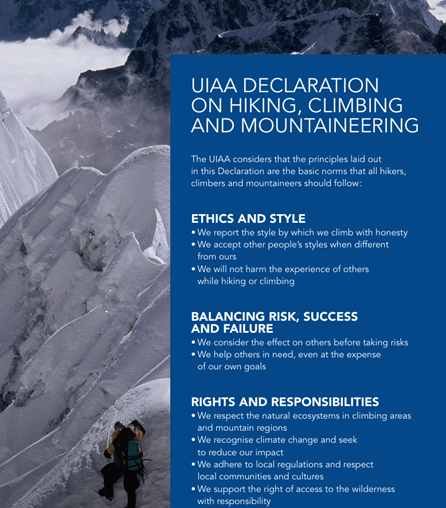
UIAA Declaration
Checklist
Permits
The foremost requirement to climb a peak in India is obtaining permission from the Indian Mountaineering Foundation (IMF), which is the apex body in regulating mountaineering activities in India.
There are certain other permits too, which may be required for some particular areas/ states of India, for example, Wildlife/ Environment fees collected by the state governments, Inner Line Permits for the frontier states of India sharing international borders with other countries, or permits to enter into some National Parks, etc. Depending on your route, we will guide you through the process of obtaining applicable permits.
Click here for the IMF rules and regulations for foreign expeditions